9 June 2018

Jurassic World: Fallen Kingdom [IMAX/3D]


The latest in this never-ending franchise, helmed by Spanish director J.A. Bayona, proved that a good director can always be let down by a hamfisted and over-ambitious script, and also by leads that lacked chemistry together. Christ Pratt is an enigmatic lead actor: he has the charisma but not the acting chops; Bryce Dallas Howard - this time with sensible footwear - has still not found another breakout role since her The Village days.

The first and third acts were good, with great action sequences and moments of gorgeous cinematography and imagery (by cinematographer Oscar Faura), but it was really the second act which was the film's Achilles' heel. Writers Collin Trevorrow and Derek Connolly were over-ambitious in their attempt to intellectualise the film/franchise, but the execution and outcome was ultimately one of caricature over-simplicity. The pseudo-philosophical approach into ethics and morality was briefly broached but never bravely explored which then left the question of why even bring it up in the first place.

There was a strong dissonance between the producers and the creative forces on what they wanted this film, and the franchise, to be. And in the end, it was the final product that suffered which ended up being unsure if it wanted to be an all-out summer, popcorn, blockbuster flick or an intellectual summer, sci-fi thriller.

However, to Bayona's credit, and taking the preposterous and contrived elements out, there were some great scary and tensed moments reminiscent of his superb directorial breakout in The Orphanage. Similarly, all the rain-soaked settings showed us that Bayona still excelled out in the elements after his terrific work in The Impossible.

And like in The Impossible, Bayona showed that he has an ability to cast and direct his child-actors. Then we had a young Tom Holland, and now in JW:FK, Isabella Sermon will be a young actress to watch out for (Squirrel Girl anybody?).

Pratt should be thankful he was cast as Star Lord as the franchise is really not working out for him (but after Avengers: Infinity War he seemed to be losing the popularity vote there too).

Howard remained, as in the first film, a damsel to prop up the masculinity of Pratt's character.

The score was again by Michael Giacchino, and also like the first film, was a disappointment as it was again highly incongruous with the action on screen.

There is a great concept hidden within the story of this entry and perhaps the best way to explore it is to get away from the franchise and its baggage. Either that or totally embrace its horror/thriller/sci-fi roots.

IMAX was great this film, but not so much the 3D. Stay to the end for short end-credits sequence.


29 May 2018

Solo: A Star Wars Story


An entertaining and fairly exciting ride albeit predictable. Ron Howard capably delivered a summer popcorn flick that paid service to the franchise but not necessarily adding much new fans. Nonetheless, it still had its share of moments especially whenever the familiar Star Wars theme play up or when Chewie and Han have a moment. After his star-making turn in the Coen brothers’ Hail, Caesar!, Alden Ehrenreich cements his leading man status here with an old-school, cinematic charisma and swagger that was highly reminiscent of a young Harrison Ford except for the annoyingly constant hands on hips/thumbs hooking pants, power-posing. 

The rest of the cast were all competent with Woody Harrelson again reprising the gruff, yet fatherly, mentor role (see: “Hunger Games”) and Emilia Clarke still coasting on her fame as Danaerys and trying to act beyond her emotional range (perhaps Ehrenreich’s much-buzzed about acting coach should have worked on Clarke too). Paul Bettany continued the Star Wars trend of having non-American actors be the villains and chew on the scenery, and then we have poor Thandie Newton who got short-changed in a thankless role (lucky we will always have Maeve). At least we have the scene-stealing Phoebe Waller-Bridge (Go. Watch. “Killing Eve”) and Donald Glover. These two deserve their own spinoff รก la Han and Chewie. 

The first act was rather relentless and exhilarating as Howard raced through one action sequence after the other, dumping exposition in media res as we go straight into Han’s formative journey aka the story. But then, the second act slowed, ostensibly for the narrative to breath. However, it was a long breath that dragged on saved for  the introduction of Waller-Bridge and Glover and the Millennium Falcon. That ultimately ended with an exciting chase and a ridiculous climax. Which then brought us to the final act that finally dovetailed this standalone into the greater mythology (fanboy moment) which really deserved to be explored rather than have it hanging. 

The score by John Powell carried John Williams motifs and served to complement the action; Bradford Young lensed the film and there were some visual similarity in the early scenes with his Oscar-nominated work on “Arrival” but otherwise there were not any standout scenes, not even the climatic moment at the end of the second act. 

“Solo” was a good standalone film and summer blockbuster on its own with nothing new to add other than introducing new actors (and characters) to the franchise and hopefully making bona fide stars out of some of them.


28 May 2018

Deadpool 2


For all its humour and meta self-referentials which entertained and brought the laughs, this Ryan Reynolds-fronted sequel lacked the spark of originality which made the first movie such a breath of fresh air in this superhero-saturated landscape. This was expected - and inevitable - with most sequels but this film really over-compensated its weak plot, lack of characterisation, and honestly, poor action sequences/CGI, with a constant barrage of sight gags and running jokes. It all got too thin and tiresome after the first act and glaringly too reliant on (or obsessed with?) Reynolds to the detrimental sidelining of proper storytelling (or movie spectacle). But, hey, at least they got Celine to help riff-off Bond.

The problem with non-Marvel produced Marvel franchises (especially Fox-produced ones) is that without Kevin Feige they do not understand, or know, what their fans (and fanboys and fangirls) want. Instead, they focused on the character without the respect to the complicated history and relationships to the MCU. Which made it a competent movie but one that felt detached from its genre despite its oft-mentioned to its history. 

Reynolds effortlessly re-inhabited the role and remained, front and center, the star of this film. But it might be time to spread the attention and humour around. It gets tiresome to keep hearing the same-y kinda jokes from him. A pity TJ Miller is currently persona non grata and Morena Baccarin has minimal screen time. 

Josh Brolin joined another Marvel franchise and he was a lot more emotionally effective as the CGI-ed Thanos than as live-action Cable here. Nonetheless, he was well-cast and sufficiently scary, imposing and gruff. A pity that the material handed him did not go beyond that and his backstory was just brushed through. 

Fan favourite from the first film, Brianna Hildebrand aka Negasonic Teenage Warhead, was relegated to a glorified cameo (to keep her from stealing the limelight from Reynolds?).  But at least she was replaced by Zazie Beetz’s awesome Domino although it was a wasted opportunity to not use her better. She has so many apt moments to utter zingers but no, we’d better keep it all for Reynolds. 

In the end, after 119 minutes, we only got one really cool action sequence  (or actually just half), tons of quips and sniggers, but no big laughs, a ham-fisted morality and a flicker of character growth. And even then, by the post-credits scenes, it kind of gets mooted. 

Speaking of which, other then the post-credits scenes, also watch out for the blink-and-you-might-missed-it cameos by the X-Men, Brad Pitt, Matt Damon, Alan Tudyk and a young David Heller aka Legion. 


27 May 2018

Isle of Dogs


Wes Anderson’s latest film is a The Little Prince-esque fable that will definitively entertain all ages. The young ones for its visual splendour and child-like allegorical storytelling of good triumphing over evil; for the adults, the visual allure of Anderson’s signature symmetry and colour-styling, and the dry, deadpan humour peppered throughout the vague, political satire. And of course we have one of Alexandre Desplat’s best score stringing the whole move along, and boy does he have fun with the Japanese influences. 

This was a Japanese dystopian derived from the mind of Anderson. It appeared typically how a non-native, familiar, yet still ultimately a stranger, visualises and imagines Japan to be. Is it offensive? Not really except for his decision to have a white, American to be the heroine. Must the radical be not from the society? Must she be the only one to see the truth? Maybe if it was not about Japan it would not have been so bad...say North Korea? Or Russia? There was no good possible plot point to have that character be white. 

But otherwise, the story was great. It was simple yet affecting with genuinely deserving emotional cues and moments. The ace voice cast definitely helped to sell the story both in its emotion stakes and the comedic beats. Standouts include Jeff Goldblum, Frances McDormand, Tilda Swinton and Bill Murray. 

This was one of Anderson’s best film. It was beautifully directed and well-paced, with a clear story and moral that was not didactic. The script was smart, the wit was wry and the eyes were moist. And surely more accessible than most of his live-action ones. However, it might not make it till Oscar season especially with the whole Asian/white-saviour controversy hanging over it. Which, regardless, will be a shame but hopefully it might still get some technical nods, and maybe a writing, directing and score recognition. 

26 April 2018

Avengers: Infinity War [3D/Atmos]


Well, that was...over. Avengers: Infinity War was a fun film but it was not necessarily the best film in the MCU. However, kudos to the Russo brothers for carrying it off and delivering a superhero / Marvel film that serviced the fans and was also a good summer/popcorn tentpole blockbuster. With such a large cast, they did actually manage to give the fan/crowd favourites the most screen time but yet not neglect the others.

Sure, they were a couple of scenes where logic fails (which was to be expected) and some moments that dragged on longer than necessary (inevitable with a 149 minutes runtime), however, one important aspect that A:IW had was an emotional weight that held the narrative together. The story had consequences. There was a cost and heroes do die, although the Russo brothers - and Kevin Feige - could have been more cruel and brutal, and also creatively braver. Maybe in the sequel.

Speaking of which, for once - and possibly due to the pending sequel - the MCU has developed a complex villain who is more than just a simple, one-directional evil-doer. Thanos commanded the screen and attention, and Josh Brolin nailed the emotional depth and sane-madness. This film could have been considered as Thanos' story more than The Avengers'.

On the other hand, one of the biggest downside to this VFX extravaganza was - sort of ironically - the lack of grandeur and spectacle. No one scene or action sequence stood out tremendously (this ain't no LOTR and Battle of Helm's Deep). And although there were a few hero moments - the introduction of fan favourites especially - the film failed to embrace its comic legacy: the full page (or even double-paged!) spread, often cutting off WOW moments a second earlier than it should. Such a shame.

In additional, a general sense of sameness - and oldness - pervaded the film which just made the film rather unexciting on a visceral basis. Also, with all MCU films after Joss Whedon's Avengers, the banter never lived up to that standard. Taika Waititi's Thor: Ragnorak came close, and surprisingly Chris Hemsworth's Thor carried it through here, but Mark Ruffalo's Hulk was a disappointment.

Narratively speaking, the Russo brothers are efficient storytellers, but they are not really the best. The juggling of multiple scenes within the same time frame could have been done better with less interruptions in flow and continuity. Again, see Lord of the Rings. Maybe there will be an extended cut? The audience are carried on along a ride, but it felt more like a cruise in the delta rather than a boat ride down the rapids or across an open ocean.

That being said, A:IW sure was a fanboy pleaser! The crowd I watched with whooped and cheered enthusiastically. The film really does set up for a sequel which will truly be even more highly anticipated!

As for technically, unfortunately Alan Silvestri's score remained uninspiring and Trent Opaloch's cinematography was just serviceable. If only Marvel could invest more into these aspects of film-making. Imagine what a Roger Deakins' MCU film would look like, or how an Alexandre Desplat-scored MCU film would double down on the emotional heft.

3D was fun but not really necessary.

Refreshingly, there was only one post-credits scene, but it sure is a doozy! Bring on 2019!


5 April 2018

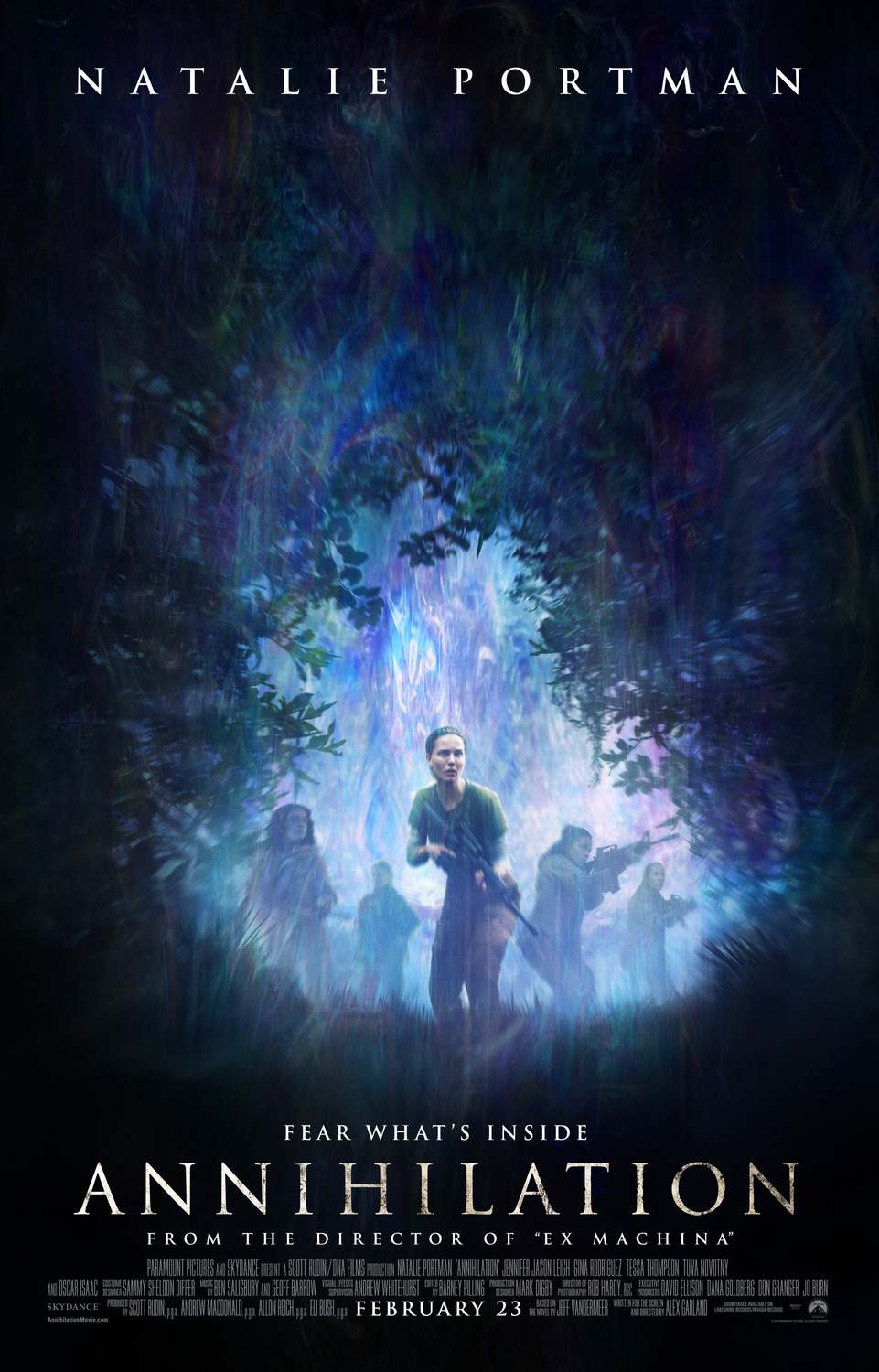
Annihilation


What a pity non-Americans do not get to watch Alex Garland’s follow-up to “Ex-Machina” on the big screen. But thankfully we have Netflix saving the day. Other than perhaps losing the sense of scope and sound design, “Annihilation” did translate rather well to the small screen. And, boy, fans of smart, intelligent sci-fi should watch this! 

This was definitely not “The Cloverfield Paradox”. “Annihilation” was definitely not dumbed down and was led by a quintet of smart, strong women/actress with nary a male in sight other than to play supporting, almost sexualised, roles. But at least, they cast Oscar Isaac, and his crazy-expressive eyes, who was great in his minimal scenes. 

If this film had the visual panache and style of Dennis Villeneuve’s “Arrival” (read: budget), coupled with a more emotional-centric (read: Hollywood-esque) script, than it might have been more acceptable in the mainstream and not been relegated to Netflix. 

Natalie Portman definitely had the depth and range to handle her character, but perhaps the fault laid in Garland’s script’s over emphasis on the science and the brains, and neglected the heart. 

On the other hand, Garland as a director has shown an improvement since “Ex Machina” with the story moving at a good pace and the plot developed intriguingly despite the non chronological narrative. There were moments where it was truly tense, and that one scene near the end of the second act wrought more tension than the whole of “A Quiet Place”.  

Another problem most moviegoers might have with this film was the ending where nothing was really explained and an epilogue that gave us more questions than answers. But taking the film as an entity itself, it really did not need to explain everything. The story had closure. Although if you do want to find out more, then go read the trilogy because I doubt we will be having anymore of it unless Netflix decides to adapt the trilogy into a mini-series (please do!). 

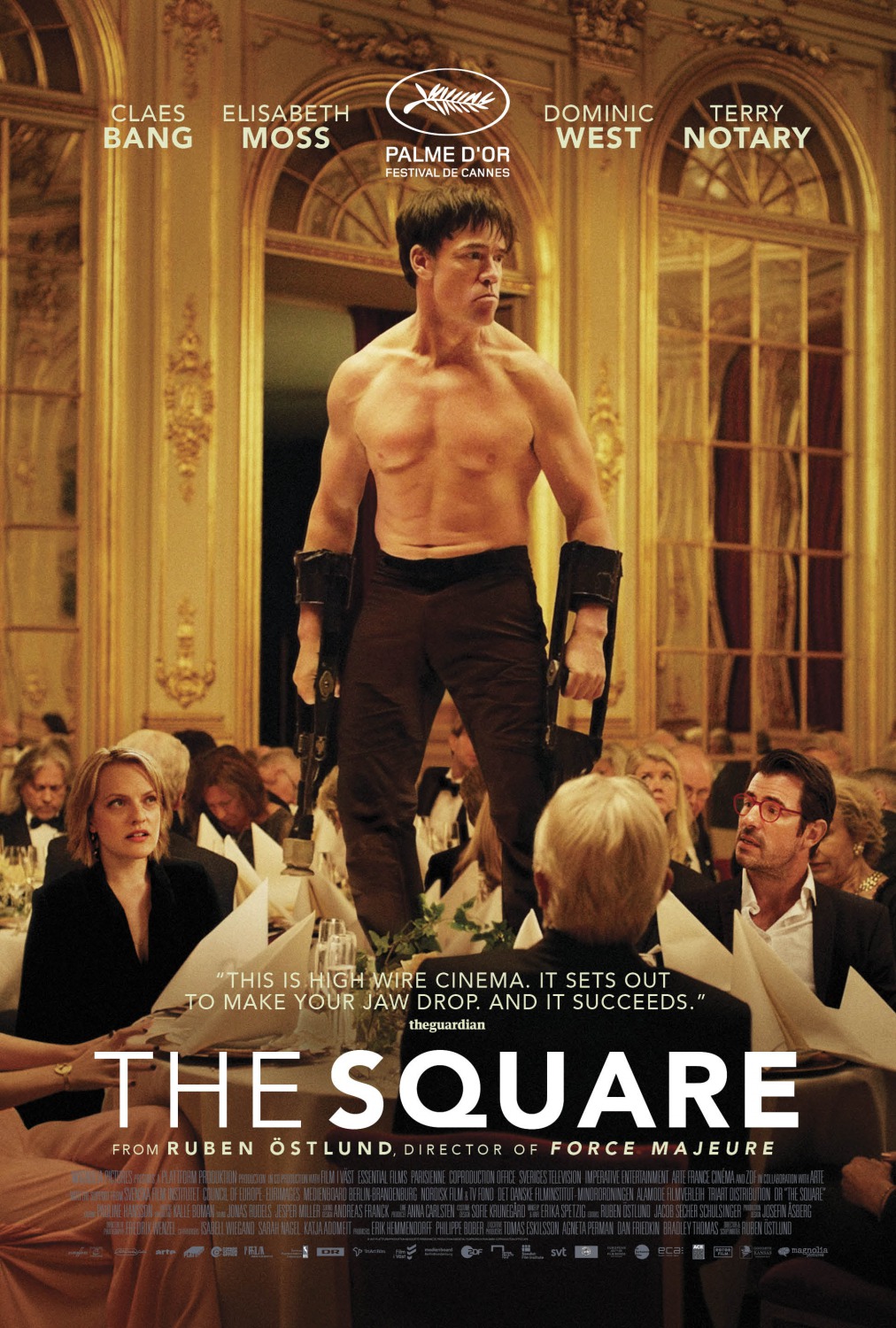
The Square


Swedish director Ruben ร–stlund followed up his tour de force film “Force Majeure” with this biting - and Palme d’Or winning - social satire about classism, elitism, ageism, narcissism, prejudices, legacy, pretensions, disenfranchisement and bystander apathy. 

The biggest problem with the film is that ร–stlund tried to include too much into one, singular - albeit 150 mins long - film, such that at times the film felt like a string of vignettes or short films intermittently strung together by a thin thread of narrative. 

However, at least the film was anchored by Claes Bang’s strong and charismatic performance as a flawed protagonist, and many impactful visuals and moments. 

The dining room scene - where the image of the poster was taken from - was one of the most powerful scene to be seen on screen in a long time. Just those few minutes beautifully, and hauntingly, captured so many of the themes the film and problems with our society now. 

And then we also had scenes where ร–stlund basically hammered the issues out loud and the art of subtlety was lost. 

Watching “The Square” was like watching a performance art piece. It raised a lot of questions within oneself both while watching and after it had ended. It was at times uncomfortable and at times bitingly funny; there were moments of fear and tension, and also of laughter and warmth. However, regardless, it was an experience. 

Transformers: Rise of the Beast

A fun, mindless summer popcorn, CGI-heavy, action-packed studio flick that sufficiently entertained without requiring too much, or any, thin...